

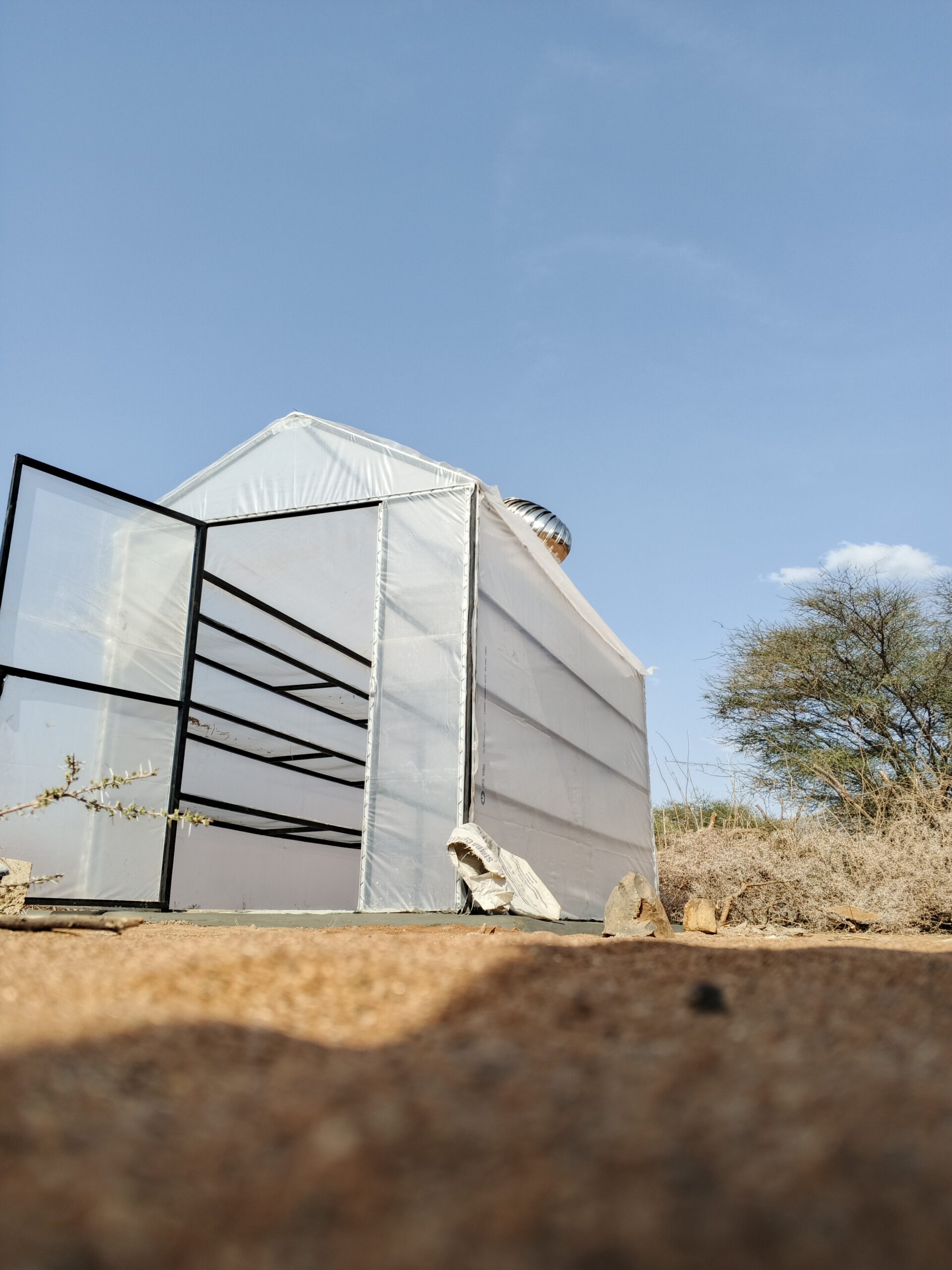
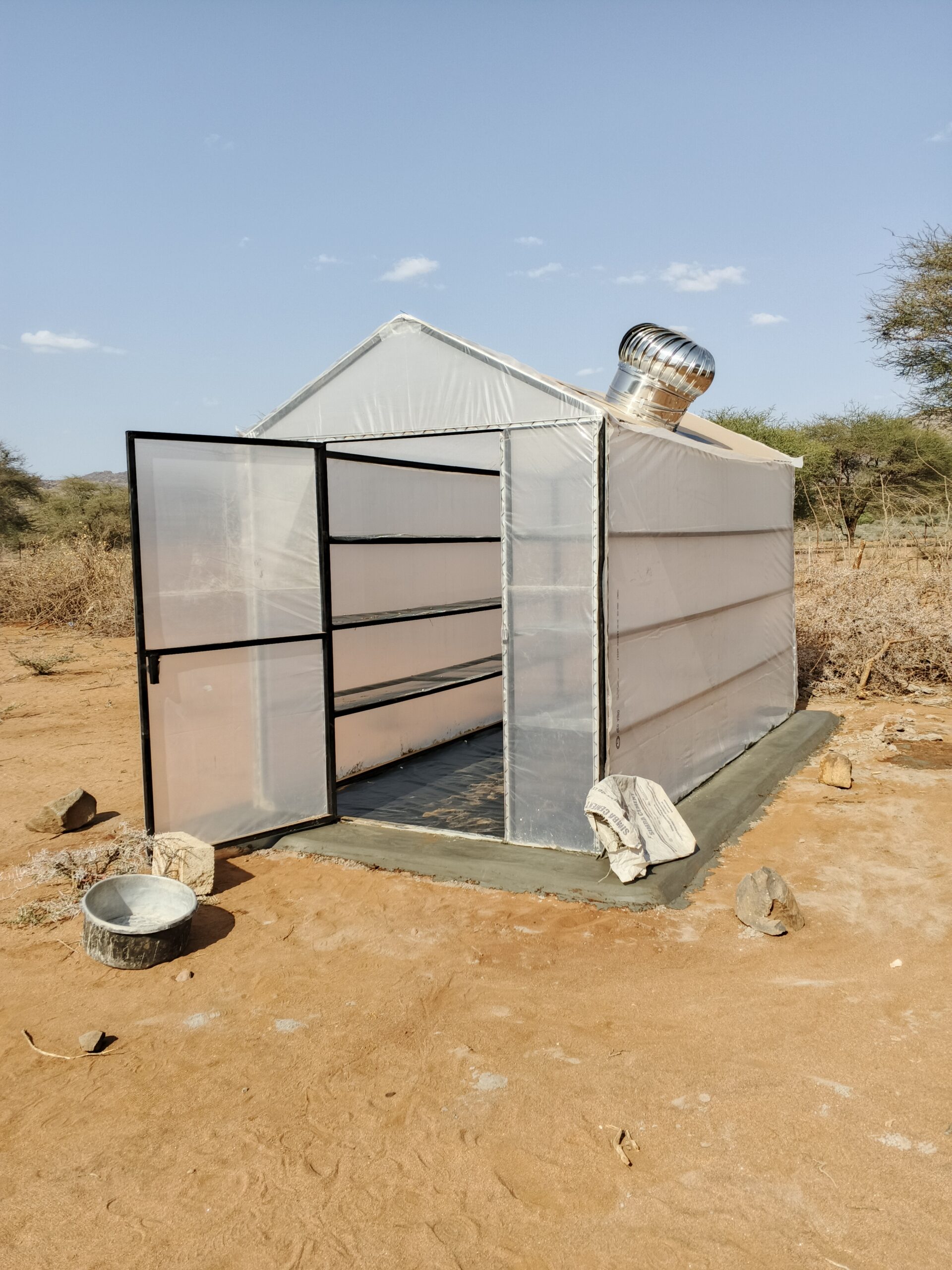
What happens when you don’t face the sun right? You dry disappointment, not tomatoes.
In Ndikir, Laisamis, we installed a natural solar dryer that’s more than just a structure — it’s a literal shift in the way this community processes food. But first, let’s get something straight. Why does orientation even matter? What happens if you build it “off”? Does it even make a difference?
Short answer? Yes. Long answer? Oh, absolutely.
If your dryer isn’t facing the right direction — if it doesn’t sit like a lizard basking in the morning-to-evening sun — you’re wasting your time. Seriously. Crooked shade, inconsistent heat, uneven drying, and all of a sudden your mango slices are either half raw or borderline charred. That’s not preservation. That’s confusion.
So, we ask ourselves a few things before setting the posts:
- Where’s true east?
- What’s the path of the sun across this particular sky?
- Are there shadows being cast at 10am that weren’t there at 3pm yesterday?
- And most importantly — will this thing work for the people who’ll use it every single day?
We had to tweak the layout on this one more than once, honestly. And that’s okay. Because when you’re building something that matters — something that affects how people store their food, how they make a little extra income, how they avoid waste — you don’t cut corners. You stand there in the sun, squinting into the light, and you figure it out.
World-class solar dryer? Maybe not.
Functional, durable, community-first? Definitely.
So what does the orientation of the dryer actually do? It decides the success or failure of what happens inside. Proper angle to the sun = consistent temperatures = safer, faster drying = less rot, less mold, less waste. And if you’re wondering, yes — we make sure it’s north-south aligned, tilted just enough to hug the sun all day long. Like clockwork.
Anyway, that’s the story of the Ndikir solar dryer. No flashy slogans. Just real people, sunlight, and food that now keeps longer.


