


Borehole Drilling in Nyandarua: A Complete Guide for 2025
Key Takeaways
| Aspect | Details |
|---|---|
| Groundwater Potential | Low to medium |
| Expected Yield | 3.5 – 18.6 m³/hour |
| Recommended Depth | 180 – 220 meters |
| Water Quality | Good, but may have high fluoride |
| Permits Required | WRA, NEMA, County Government |
| Estimated Total Cost | KES 1 – 3 million |
Borehole drilling in Nyandarua has become essential for residents and farmers who need reliable water supply throughout the year. The county sits on volcanic formations that hold groundwater at various depths, and with proper surveying and drilling, you can access water that will serve your domestic and agricultural needs for decades.
I’ve worked on several projects in this region, and I can tell you that Nyandarua’s geology is both challenging and rewarding. The volcanic rocks that dominate the landscape create aquifers at specific depths, but you need a proper hydrogeological survey to find them. Don’t let anyone convince you to drill without one.

Why Nyandarua County Needs Borehole Drilling
Nyandarua County faces water challenges that many highland regions in Kenya share. The area receives rainfall between 800 to 1270mm annually, which sounds like alot, but this water doesn’t always reach households when they need it. Rivers and dams can dry up during certain months, and municipal water supply is inconsistent in many parts of the county.
Borehole drilling in Nyandarua solves this problem by tapping into underground aquifers that hold water year-round. Unlike surface water, groundwater doesn’t evaporate during dry spells. Once you have a functioning borehole, you have water security.
The agricultural sector in Nyandarua particularly benefits from borehole water. Dairy farming and crop production require consistent water supply, and you cant really depend on rain alone. Many farmers in areas like Mawingo, Kipiriri, and other divisions have invested in boreholes and seen their productivity increase significantly.
For comprehensive borehole drilling services in Kenya, working with experienced contractors makes all the difference. They understand local geology and can recommend the right drilling approach for your specific location.
Understanding Nyandarua’s Geology and Groundwater Potential
The geology of Nyandarua is volcanic in nature, which directly affects how and where groundwater occurs. Let me break this down in simple terms because it matters for your borehole project.
The Rock Formations
Nyandarua sits on several volcanic rock series:
- Simbara Series – The oldest rocks, mainly basalts from the Miocene age
- Sattima Series and Laikipia Lavas – Non-porphyritic lavas and pyroclastic rocks layered on top
- Kijabe-Type Basalts – Younger basalts that overlie trachytes
- Trachyte Rocks – Found in eroded volcanic vents
These rocks don’t hold water in the same way that sandy soils would. Instead, groundwater in volcanic areas exists in:
- Fractured zones within lava flows
- Weathered rock layers
- Old land surfaces between eruptions
- Sedimentary layers between volcanic deposits
This is why borehole drilling in Nyandarua requires proper investigation. Water could be at 40 meters or 230 meters depending on your exact location. The area around Mawingo and Kipiriri typically shows water struck levels between 38m and 230m below ground.

Understanding everything about water borehole drilling will help you make informed decisions about your project.
The Hydrogeological Survey Process for Borehole Drilling in Nyandarua
Before any drill touches the ground, a hydrogeological survey must be done. I cannot stress this enough. Skipping this step is like building a house without checking the soil – you might get lucky, or you might waste hundreds of thousands of shillings.
What Happens During a Survey?
A licensed geologist will visit your site and conduct several investigations:
Desk Study
- Review of existing borehole data in your area
- Analysis of geological maps
- Study of surrounding borehole yields and depths
Geophysical Investigation The most common method used in Nyandarua is Vertical Electrical Sounding (VES). This technique measures the electrical resistance of underground layers. Water-bearing formations have different electrical properties than dry rock.
The process involves:
- Placing electrodes in the ground
- Passing electrical current through them
- Measuring voltage at different distances
- Creating a profile of underground conditions
PQWT Profiling Modern surveys also use PQWT equipment which identifies fractured zones that hold groundwater. The profile shows different colored zones – blue areas indicate weathered rocks with high groundwater potential, while red areas show massive hard formations with little infiltration.
Site Selection
Based on all this data, the geologist recommends the exact drilling point. In the Mawingo area hydrogeological report, for example, the recommendation was to drill at VES 1 probe position 6 profile – a very specific location identified through proper investigation.
When considering what to look for when drilling a borehole, the survey results should guide every decision.
Borehole Drilling Depth and Yield Expectations in Nyandarua
So how deep do you need to drill, and how much water can you expect? These are the questions everyone asks, and the answers depend on your location within Nyandarua.
Depth Requirements
Based on existing borehole data in Nyandarua:
| Borehole Reference | Depth Drilled | Water Struck Level | Yield |
|---|---|---|---|
| C-25387 (Gulf Resort) | 160m | 155m, 180m | 18.65 m³/hr |
| C-249994 | 240m | 230m | 15 m³/hr |
| C-10816 | 200m | 175m, 140m | 3.5 m³/hr |
| C-24474 | 160m | 38.8m, 96m, 125m | 9 m³/hr |
For most locations in Nyandarua, drilling to a minimum of 180 meters and maximum of 220 meters is recommended. This depth ensures you penetrate the productive aquifer zones fully.
Yield Expectations
Borehole drilling in Nyandarua typically produces yields between 3.5 and 18.6 cubic meters per hour, with an average of about 9.78 m³/hour. What does this mean in practical terms?
- 3.5 m³/hour = 84,000 liters per day (if pumped 24 hours)
- 9.78 m³/hour = approximately 235,000 liters per day
- 18.6 m³/hour = over 446,000 liters per day
For domestic use requiring about 20 m³/day, even the lowest yield would be more than sufficient.
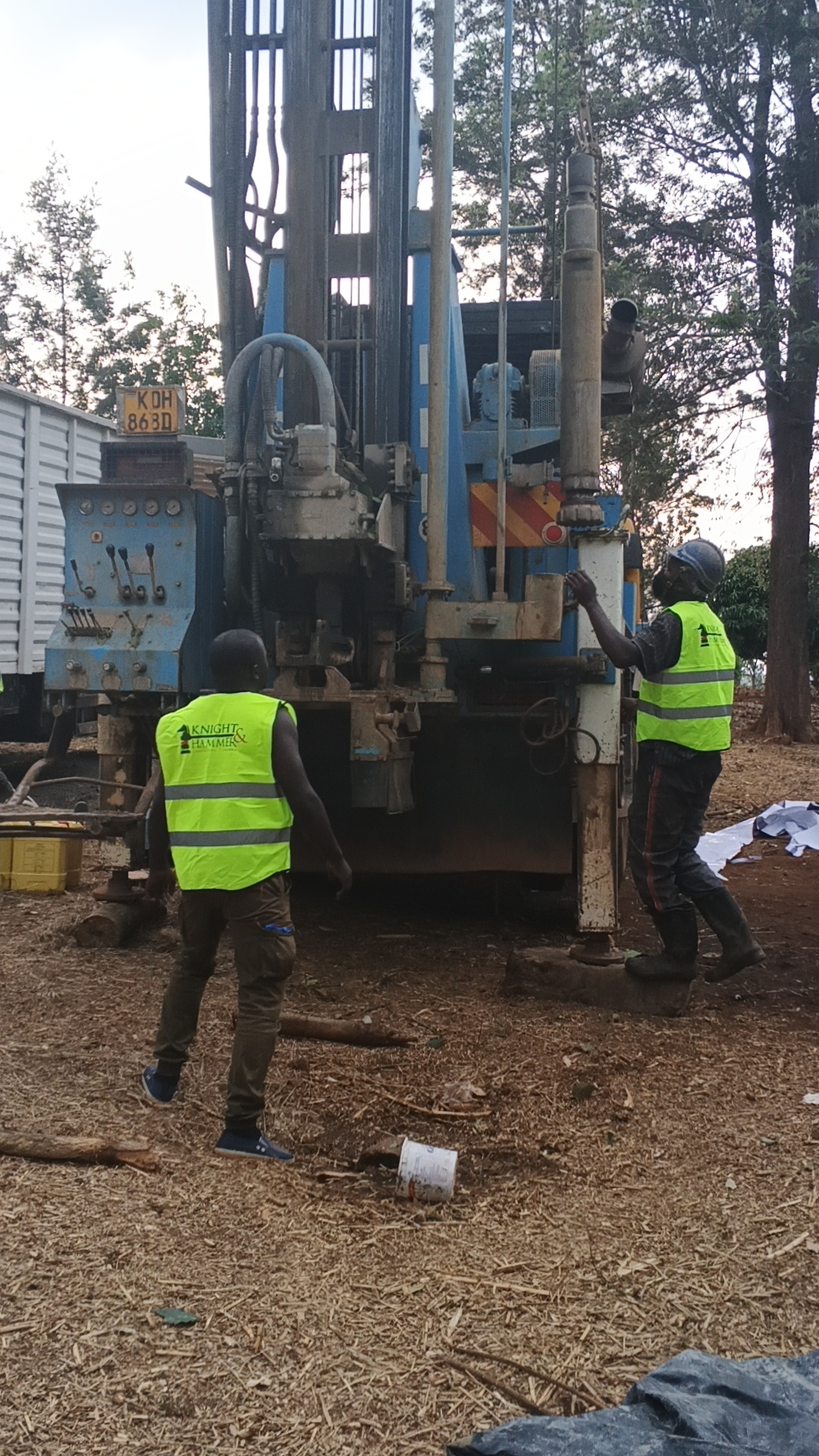
The steps in borehole drilling determine whether you achieve maximum yield from your borehole.
Borehole Casing and Construction Requirements
The casing is what keeps your borehole from collapsing and ensures clean water reaches the surface. For borehole drilling in Nyandarua, the specifications matter because of the local geology.
Recommended Specifications
- Diameter: 8-inch borehole with 6-inch casing
- Casing Material: Mild steel casings resistant to corrosion
- Screens: Gas-slotted screens for water intake sections
- Gravel Pack: 2-4mm grain size around the screened sections
Construction Sequence
- Plain Casing – Installed from surface through non-aquifer zones
- Sanitary Seal – Top 5 meters grouted with cement
- Screens – Placed against aquifer zones identified during drilling
- Gravel Pack – Fills space between screen and borehole wall
- Bentonite Seal – Separates different water-bearing zones
- Bottom Cap – Closes the borehole at the bottom
Why does this matter? Poor casing installation leads to:
- Sand pumping (damages your pump)
- Contamination from surface water
- Borehole collapse over time
- Reduced yield
Choosing the right borehole casing material – steel or plastic depends on depth, water chemistry, and budget. For Nyandarua’s depths of 180-220m, steel casings are generally preferred.
Learn more about borehole casing options from experienced contractors.
Cost of Borehole Drilling in Nyandarua
Let’s talk money, because this is often the deciding factor for many people. Borehole drilling in Nyandarua requires significant investment upfront, but the long-term savings make it worthwhile.
Cost Breakdown (2025 Estimates)
| Item | Cost Range (KES) |
|---|---|
| Hydrogeological Survey | 50,000 |
| Mobilization | 60,000 |
| Drilling (per meter) | 3000 |
| Casing (per meter) | 3,500 |
| Test Pumping & Water Analysis | 55,000 |
| Pump Installation | 500,000 |
Example Calculation for 200m Borehole
- Survey: KES 50,000
- Mobilization: KES 60,000
- Drilling (200m × 3,000): KES 600,000
- Casing (200m × 3,500): KES 700,000
- Test pumping: KES 55,000
- Pump (submersible): KES 550,000
Total: Approximately KES 2,150,000
The actual cost varies based on:
- Ground conditions (hard rock costs more)
- Distance from contractor’s base
- Type of pump selected (solar vs electric vs manual)
For detailed pricing information, check cost of drilling a borehole in Kenya and compare borehole drilling prices from different contractors.
Water Quality Considerations in Nyandarua Boreholes
Getting water is one thing. Getting water you can actually use is another. Borehole drilling in Nyandarua generally produces good quality water, but there are some things you should know.
Expected Water Quality
Based on regional data:
- General Quality: Good for most purposes
- Potential Issue: Elevated fluoride levels
- Suitability: Good for animals, moderately suitable for domestic use
Fluoride is common in volcanic areas across Kenya. WHO recommends maximum 1.5 mg/L for drinking water. Some boreholes in Nyandarua exceed this limit, which can cause dental fluorosis with prolonged consumption.
Required Testing
After drilling, water samples must undergo:
- Physical Analysis – Color, odor, taste, turbidity
- Chemical Analysis – pH, hardness, fluoride, iron, manganese, nitrates
- Bacteriological Analysis – E.coli, coliforms, total bacterial count
Only after testing can you determine if the water is suitable for your intended use. If fluoride is high, treatment options include:
- Bone char filters
- Activated alumina
- Reverse osmosis systems
Proper borehole maintenance tips will help keep your water quality consistent over time.
Permits and Regulations for Borehole Drilling in Nyandarua
You cannot just drill a borehole anywhere you want in Kenya. There are legal requirements that protect both you and the environment.
Required Authorizations
Before Drilling:
- Groundwater abstraction authorization from Water Resources Authority (WRA)
- Environmental clearance from NEMA where applicable
- County government permits
After Drilling:
- Test pumping report submission
- Water quality analysis results
- Borehole completion report
Why These Permits Matter
The regulations ensure:
- Your borehole doesn’t affect neighboring boreholes (minimum 800m distance is often checked)
- Groundwater resources aren’t over-extracted
- Proper construction standards are followed
- Water quality is monitored
In the Mawingo area case study, the hydrogeological report confirmed no existing borehole within 800m radius, meaning no interference with existing users.
There are no shortcuts in drilling of boreholes if you want a legal, functional, and long-lasting water source.
For professional guidance through the entire process, contact KNH Contractors who specialize in borehole drilling services in Kenya.
Frequently Asked Questions About Borehole Drilling in Nyandarua
How deep should I drill a borehole in Nyandarua?
Most boreholes in Nyandarua require depths between 160m and 240m. A hydrogeological survey will determine the exact depth for your specific location. The recommendation is typically 180m minimum to 220m maximum to fully penetrate productive aquifer zones.
How much water can I expect from a borehole in Nyandarua?
Expected yields range from 3.5 to 18.6 cubic meters per hour, with an average of about 9.78 m³/hour. This is more than enough for most domestic and small-scale agricultural needs.
Is the water safe to drink?
Generally yes, but testing is required. Nyandarua groundwater may contain elevated fluoride levels which could exceed WHO drinking water guidelines. Full chemical and bacteriological analysis should be done after drilling.
How long does borehole drilling take in Nyandarua?
The actual drilling typically takes 3-7 days depending on depth and ground conditions. Add time for survey (1-2 days), casing installation (1-2 days), and test pumping (1 day). Total project duration is usually 2-3 weeks.
Do I need a permit to drill a borehole in Nyandarua?
Yes. You must obtain groundwater abstraction authorization from the Water Resources Authority before drilling begins. Operating without a permit is illegal and could result in your borehole being sealed.
What type of pump should I install?
Options include submersible electric pumps, solar-powered pumps, or manual hand pumps. For depths around 200m and yields of 9-10 m³/hour, submersible pumps are most practical. Solar systems are becoming popular to reduce electricity costs.
How often does a borehole need maintenance?
Annual maintenance is recommended. This includes pump servicing, water quality testing, and checking water level trends. Proper maintenance extends borehole life to 25-50 years.
For professional borehole drilling in Nyandarua and across Kenya, KNH Contractors provides complete services from survey to pump installation. Visit our boreholes page or check our FAQ section for more information.


