


Key Takeaways
| Aspect | Key Information |
|---|---|
| What are solar dryers? | Boxes that use sun to dry crops, fish, and farm goods |
| Drying speed | 2-5 times faster than mat drying |
| Loss reduction | Up to 40% less waste |
| Types available | Direct, indirect, and hybrid solar dryers |
| Price range | From small units to big systems |
| Best crops | Mangoes, kale, fish, herbs, maize, and more |
| Key benefit | Free to run – only needs sun |

What Are Solar Dryers and Why They Matter
Solar dryers are simple boxes that dry food using sun. I’ve seen farmers lose half their harvest to mold. Rain ruins crops. Pests eat them. Solar dryers fix this.
These boxes work easy. You put crops inside. The sun heats them up. Water leaves the food fast. What makes solar dryers good is how they keep bugs out. They block rain. They stop dust. And they work faster than old ways.
K&H Contractors puts these across Kenya. From Marsabit to Nairobi. Farmers who threw away bad food now sell good dried goods. The box pays for itself in one or two seasons.
There are three main types:
- Direct dryers where sun hits food through clear plastic
- Indirect types where air heats first then dries crops
- Hybrid models that add heat when clouds come
Each type works for different jobs. It depends on what you dry. And how much money you have. Most small farms start with direct types. They cost less. They’re easy to use.
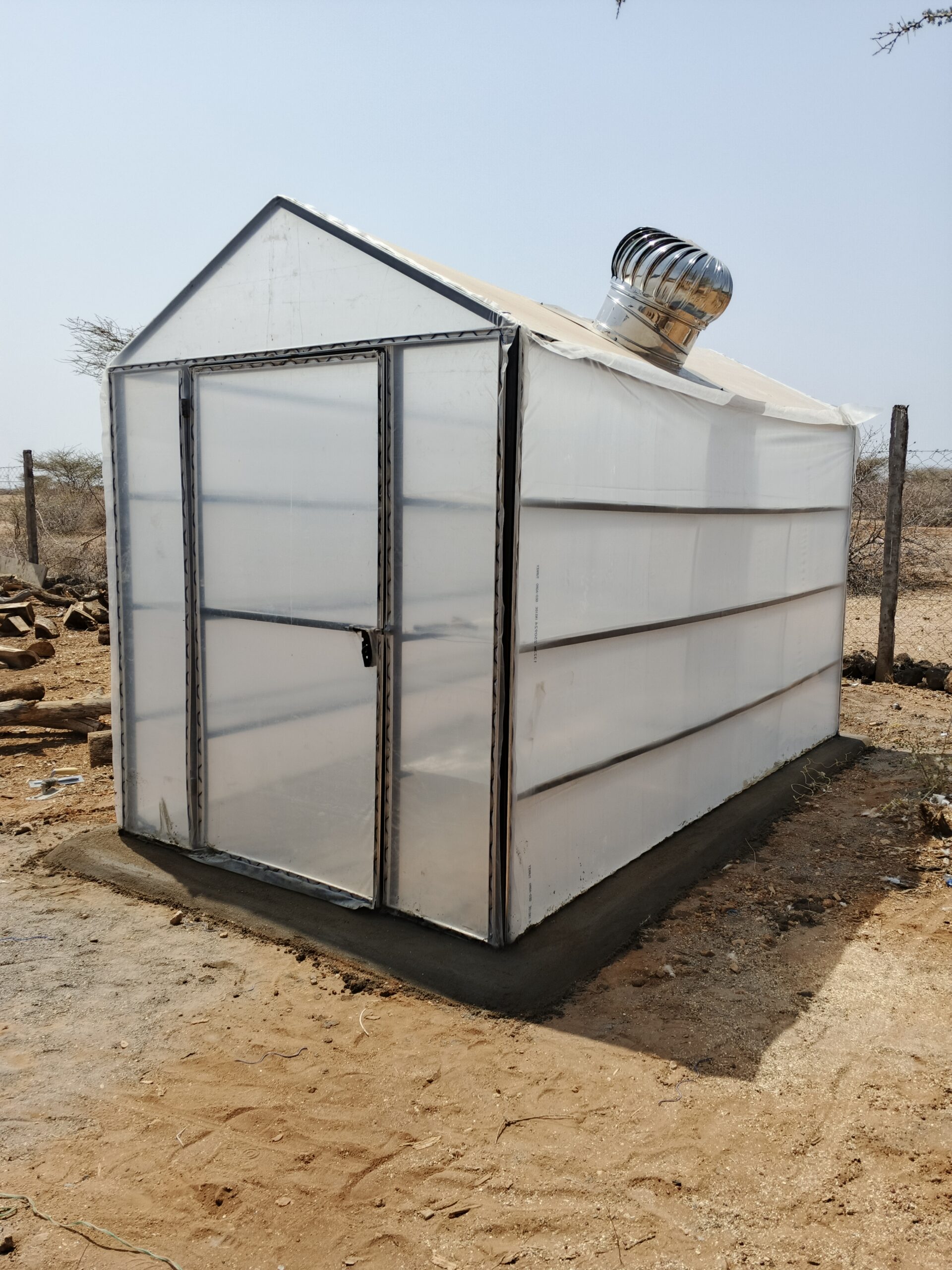
How Commercial Solar Dryers Work
Solar dryers trap heat like a car on a hot day. The clear cover lets sun in but keeps heat inside. Temps can hit 50-70°C. That’s hot enough to dry food fast. But not so hot it burns things.
Here’s what happens. Warm air picks up water from crops. The air gets wet. Hot air rises up. It goes out the top vents. Fresh dry air comes in from the bottom. This keeps going all day. No power needed. No parts that break. Just air moving around.
The main parts are:
- Clear UV cover – lets light in, keeps rain out
- Black floor – turns light into heat
- Mesh trays – let air flow under and over food
- Bottom vents – bring fresh air in
- Top vents – let wet air out
I’ve tried these with cassava chips to herb leaves. The temp stays the same all day. This stops uneven drying. Food on the edges dries same as food in the middle. You don’t need to move things around much.
Natural solar dryers work well for crops that need soft treatment. The gentle heating keeps colors bright. It saves vitamins too. I’ve seen dried greens keep their color for months this way.

Advantages of Solar Dryers in Kenya
The money impact is huge. I’ve seen it in farm groups. Food waste drops hard – like 30-40% less. For a farmer with 500 kg of tomatoes, that’s 150-200 kg saved. That’s food you sell instead of throwing away.
Quality gets way better too. Dried mangoes from a solar dryer look clean and the same size. They get good prices at city markets. Compare that to mat-dried fruit covered in dust and fly eggs. Buyers won’t touch it. The price gap can be 50-100 shillings per kilo. That adds up fast.
Main benefits:
- Speed: 2-5x faster than mat drying
- Clean: No bugs, animals, or dust get in
- Rain proof: Weather won’t ruin your batch
- Same quality: Every piece dries the same way
- Free to run: Sun costs nothing
- Value add: Make foods that last all year
Women’s groups benefit most from this tech. I know several groups that started with one dryer. Now they run small shops selling dried veggies and fruits. The income is steady. The work isn’t hard. And buyers keep wanting more dried snacks.
Green benefits matter too. Unlike electric dryers that use coal power or wood burners, solar dryers use free clean energy. No smoke. No bills. For Kenya’s climate goals, this makes sense.
The complete guide to solar dryers shows how to install, use, and fix them. Most farmers learn in just a few hours.

Types of Commercial Solar Dryers in Kenya
Direct Solar Dryers are the most simple type. Food sits on trays under a clear cover. Sun hits the food straight on. These look like tiny glass houses. They cost the least to build. They’re great for fruits like pineapples and bananas. These can handle strong sun. The bad part? Some crops lose color from too much UV light.
Building one is easy. You need a wood frame. UV-treated plastic or hard plastic sheet. And mesh trays. A 2m x 1m home unit can dry 10-30 kg per batch. That’s enough for a small farm. K&H Contractors builds these in all sizes. From tiny home models to big group systems.
Indirect Solar Dryers use two steps. First, sun heats air in a separate box. That box is painted black inside. Then hot air flows into the drying room where food sits. The crops never see direct sun. This keeps colors bright. It saves vitamins better.
These work great for:
- Leaf veggies (kale, greens, cowpea leaves)
- Herbs (moringa, mint, grass)
- Fish (small fish, tilapia)
- Medicine plants
The heat box can go on a roof. Or lean at an angle to catch more sun. Air temps inside reach 45-65°C. Perfect for most products. Cost is more than direct dryers. But the quality boost is worth it for top products.
Quick compare:
| Feature | Direct Solar Dryers | Indirect Solar Dryers |
|---|---|---|
| Cost | Lower | Higher |
| Color kept | Fair | Great |
| Vitamins kept | Good | Better |
| Good crops | Fruits, grains | Veggies, herbs, fish |
| How hard | Simple | A bit harder |
| Drying time | Faster | A bit slower |
Natural solar dryers in Kenya are getting more popular. Farmers see that quality matters for good prices. A batch of bright green dried kale sells way better than brown leaves.

Hybrid Solar Dryers
Hybrid solar dryers fix the main problem with sun-only systems. They don’t work at night. Or when clouds block sun. By adding backup heat, you can keep drying all day and night. Even during Kenya’s rainy months. I’ve seen farmers lose whole batches because three days of rain stopped drying. Everything started to rot.
Most common backup systems:
Wood burners – burn farm waste like corn cobs, rice husks, or wood bits to make heat. A simple burner can keep 40-50°C inside when there’s no sun. Fuel is free or very cheap. You’re using waste from your farm.
Electric heaters – work like big water heaters. Powered by grid or solar panels with batteries. More costly to run but cleaner. Easier to control temp. Best for big dryers or shops near power lines.
Biogas systems – some smart farmers connect dryers to biogas tanks fed by animal waste. The gas burns clean. Gives steady heat at night.
The switch can be by hand. You light the burner when needed. Or automatic with heat sensors. Hybrid systems cost 30-50% more than basic solar dryers. But the ability to dry all the time makes them worth it for serious sellers.
I watched a women’s group in Marsabit use their hybrid dryer for mangoes during April-May. It rains a lot then. Without the backup heater, they would’ve lost half their fruit. Instead, they dried everything perfect. Sold it at top prices.
Build quality matters even more for hybrid systems. The K&H Contractors team makes sure of good insulation. Sealed joints. Safe heat parts. A badly built hybrid dryer can be unsafe if fire safety isn’t done right.

Solar Dryer Materials and Construction
Building a solar dryer that lasts needs the right stuff. Good building too. I’ve seen too many homemade units fall apart after one rainy season. Someone used cheap wood or bad plastic that broke down in the sun.
Frame stuff:
- Treated wood – most common for small to medium dryers. Cypress or treated pine fights rot and bugs. Needs new paint every 2-3 years.
- Metal frames – steel or aluminum for bigger units. Costs more but lasts forever. Must be painted to stop rust.
- Mix – wood structure with metal at stress points.
Clear covers:
- UV-treated plastic (200 micron min) – cheap, lasts 2-4 years before you need new. Works fine for most uses.
- Hard plastic sheets – way more costly but lasts 10+ years. Better light through. Doesn’t break easy. Worth it for permanent setups.
- Glass – rarely used. Too heavy and costly. But lasts long and lets light through well.
Drying trays:
- Food-safe plastic mesh
- Steel wire mesh (costly but best for fish and meat)
- Woven fake fiber screens
- Bamboo or wood slats (old way but hard to clean)
The base should sit 50-100 cm off the ground. This lets air move underneath. Protects from floods. Concrete blocks or treated wood posts work well. Some designs have lockable doors to stop theft. That’s a real worry in some areas.
K&H Contractors uses standard designs tested across different Kenya climates. Their build manual shows exact sizes. Material grades. Assembly ways that work every time. Don’t try to save money with bad materials. You’ll spend more on fixes and lost products.
Temp and wet-level tools should be added for selling operations. These simple tools help get drying times right. Stop under or over-drying.

Solar Drying by Crop
Different crops need different drying ways. What works great for maize will ruin your herb leaves. Here’s what I learned from years of testing:
Fruits need temps around 50-60°C. Take 1-4 days based on how thick:
- Mangoes – slice 5-8mm thick, dry 2-3 days, end moisture 15-20%
- Pineapples – rings or chunks, 2-3 days, watch for over-drying which makes them too hard
- Bananas – slice long ways, 1-2 days for chips, longer for chewy feel
- Pawpaw – thin slices dry fastest, sticks easy so flip often
Veggies need softer treatment (40-50°C) to keep color:
- Kale – 4-6 hours in indirect dryer, stays bright green
- Amaranth – very soft, use low temps or color turns brown
- Tomatoes – halved or sliced, 1-2 days, great for powder if dried crisp
- Cowpea leaves – like kale, dry quick due to thin leaves
Grains (35-45°C):
- Maize – reduce from 25% to 13% moisture for safe storage
- Beans – rarely need more drying unless picked during rains
- Millet – spread thin, turn often
Fish (45-55°C):
- Small fish – tiny fish dry in 6-8 hours, must get very dry to stop spoiling
- Tilapia – split and cleaned, 1-2 days, high protein means careful temp control needed
Herbs (35-45°C max):
- Moringa – leaves dry in 3-4 hours, temps over 50°C kill nutrients
- Lemongrass – chop into small pieces, 1 day
- Mint – very fast drying, 2-4 hours
Loading matters too. Don’t crowd trays or air won’t move right. Leave 2-3 cm between pieces. Use single layers for small items like herbs. Turn trays every few hours for even drying. This matters most in direct solar dryers.
Testing for done: fruits should bend but not break, veggies should crumble easy, grains should be hard enough your fingernail can’t dent them, and herbs should crumble to powder when rubbed.
Solar Dryer Prices in Kenya
Prices change a lot based on size, design, and materials used. Here’s what you can expect to pay:
Home Solar Dryers (2m x 1m, 10-30 kg):
- Basic direct dryer: KSh 15,000 – 30,000
- Better indirect design: KSh 35,000 – 55,000
- Small hybrid unit: KSh 60,000 – 85,000
Group Solar Dryers (6m x 3m or 8m x 3m, 100-300 kg):
- Direct system: KSh 80,000 – 150,000
- Indirect system: KSh 150,000 – 250,000
- Hybrid with wood burner: KSh 300,000 – 450,000
Big Solar Dryers (20m+ length, 1-2 tons):
- Large systems: KSh 800,000 – 2,500,000
- Multi-room designs: KSh 1,500,000 – 4,000,000
These prices cover materials, building work, and basic training. Solar dryer prices in Kenya change based on material costs and where you are. Far areas cost more due to transport.
Cost compare with other ways:
| Drying Way | Start Cost | Running Cost/Year | Product Quality | Drying Speed |
|---|---|---|---|---|
| Open sun | Free | Free | Poor | Slow |
| Electric dryer | High | Very high (power bills) | Great | Fast |
| Solar dryer | Medium | Zero | Great | Fast |
| Wood dryer | Medium | Medium (fuel) | Good | Fast |
The return on money for a group solar dryer processing high-value crops like dried mangoes can be 12-18 months. Lower value crops like maize take longer. But still pay back within 2-3 years through less waste.
Money help exists through farm programs, NGOs, and small loan groups. Some county governments help pay for solar dryers for farmer groups. This is part of value addition plans.
Upkeep costs are tiny. Maybe KSh 5,000-10,000 per year for plastic replacement, small fixes, and new paint. Compare that to electric dryers that can cost KSh 50,000+ yearly in power bills.

Custom sizing is available from K&H Contractors based on what you need. They’ll check your crops, how much you make, and your budget. Then suggest the right system size and type.
Frequently Asked Questions
How long do solar dryers last? A well-built solar dryer with treated wood frame lasts 10-15 years with basic care. The plastic cover needs replacement every 2-4 years. That costs KSh 2,000-8,000 based on size. Hard plastic covers last much longer. Often 10+ years without replacement.
Can solar dryers work during rainy season? Basic solar dryers don’t work well with heavy clouds or constant rain. Hybrid models with backup heating solve this. They keep drying temps no matter the weather. Or you can time your drying for sunny periods.
What’s the right size for a small farm? For most small farmers processing 50-200 kg of produce per week, a 4m x 2m dryer works perfect. This size handles daily batches while staying affordable. That’s KSh 60,000-120,000. Bigger farms need group or big-sized units.
Do I need special training to run a solar dryer? Basic use is simple. Load products, open vents, watch temp. But a half-day training helps you learn best loading ways. Temp control. And crop-specific drying times. K&H Contractors gives training with every install.
Which crops give the best return on money? High-value products like dried mangoes, moringa powder, dried fish, and dried local veggies offer the fastest ROI. These get top prices at city markets and health food stores. Grains like maize give lower margins. But provide steady income through less storage waste.
Can I build my own solar dryer? Yes, if you have wood skills and access to proper materials. Free designs exist online. But poorly built dryers fail quick. May dirty your products. Professional building from skilled builders like K&H Contractors ensures safety, good work, and long life.
How do I stop theft or damage? Put in lockable doors with good padlocks. Place the dryer in a visible spot near your home. Or within a fenced area. Some groups hire night guards for shared dryers. Insurance is available for higher value setups.
What care does a solar dryer need? Clean mesh trays after each use to stop dirty food. Check and tighten any loose joints monthly. Repaint wood frames every 2-3 years to stop rot. Replace plastic cover when it gets cloudy or torn. Check vents to ensure they’re not blocked by trash.
Are there government help programs? Some county governments and farm programs offer partial funding for solar dryers. Especially for farmer groups and women’s groups. Check with your local farm extension officer. Or contact groups like the Ministry of Agriculture for current programs.
How much can I earn from a solar dryer? Income varies hugely based on what you dry. And your market access. A women’s group processing 100 kg of mangoes weekly during peak season can earn KSh 50,000-100,000 monthly profit. Year-round work with diverse crops generates steady income of KSh 30,000-80,000 monthly for group-sized dryers.


