

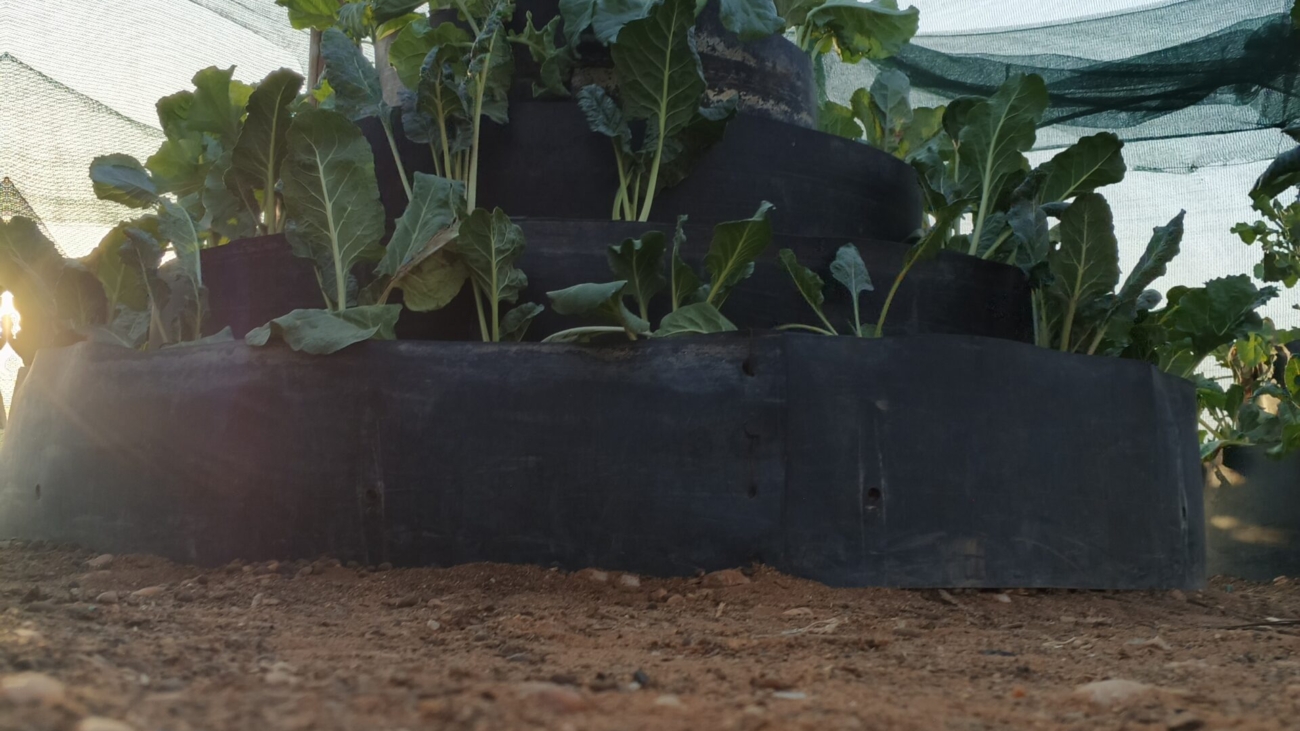
KNH Limited’s climate smart agriculture multi-storey gardens in Kenya are a vertical farming system popular with urban vegetable farmers. Growing herbs on a multi-storey garden in Kenya is now a common practice in limited spaces in densely populated locations. They are defined as climate smart agriculture because they conserve land and water

What is a multi-storey garden?
It is a vertical farming method that limited space to create gardens stacked on each other. These vegetable crops (most common for kitchen gardens) provide a fresh supply of vegetables for subsistence or commercial use. Commonly grown crops are;
- Vegetables; kales, spinach, strawberry, coriander, carrot, garlic, leeks, black nightshade, amaranth
- Herbs and spices; rosemary, lemon grass, citronella, and mint
- Fruits; strawberry
A grower will choose to have the multi-storey farming system out in the open, or enclosed in a greenhouse or shade house. This multi-storey cropping is determined by the crop grown, or other factors such as crop destruction by pests or disturbance from pets. A grower will choose to have a shade net or dam liner as the supporting basis of this pyramid farming in Kenya. In this article, we look at the dam liner option

Our multi-storey garden price is Kes 2,000 a unit for the dam liner material type. This multi-storey garden cost covers all material and labor
How do you make multi-storey gardens in Kenya?
Key attributes of the dam liner material type garden
- Layers. It has 6 layers including the base
- Circumference. The base layer has a 6M circumference
- Layer reduction by height. Each layer is a meter less in circumference as it rises
- Height. Each layer has a height of 0.2M / 20cm
- Material. 0.75mm or 1mm thick HDPE dam liner to hold the soil together. The dam liner is bolted or welded at the joint

To reduce soil compaction, and improve soil aeration, we mix soil with manure at a ratio of 2:1. On a space of 2M x 2M, a multi-storey garden will hold 180 to 250 plants. Compare this with a sack/ shade net supported garden that has 100-150 plants. And again with conventional ground farming that has 30-60 plants over the same area. All calculations factor in the walking path
Multi-storey garden materials
- dam liner
- joining clips
- soil
- fertiliser
How to irrigate multi-storey gardens in Kenya
Pre-perforated rip lines or button drippers irrigate these crops. Frequency of irrigation is twice or thrice weekly according to the prevailing weather
Multi-storey gardens in Kenya
FAQs
1. How to prepare a multi storey garden?
As described under the heading Vertical Garden: Complete Guide to Space-Saving Growing in Kenya above
2. What is the size of a multi-storey garden?
6 square feet
3. What are the advantages of a multi-storey garden?
- It is easy to assemble, and maintain
- It saves on land and water
- They are done over small spaces
- You can grow many typesof vegetable crops on it
4. What are the disdavantages of a multi-storey garden?
- It takes time to design and make
- It requires training to make for the first time
- Expensive to undertake on a large scale. Ideal for small spaces